Observing Light Through the Day: Time-Lapse Sketching vs. Single-Moment Studies
Observing Light Through the Day: Time-Lapse Sketching vs. Single-Moment Studies
Light transforms interiors over time. Two common practices for recording those changes are time-lapse sketching—repeated quick studies at intervals—and single-moment studies that concentrate on a precise instant. Both approaches reveal important truths about light, shadow, and mood; each emphasizes different temporal and perceptual qualities.
Time-Lapse Sketching
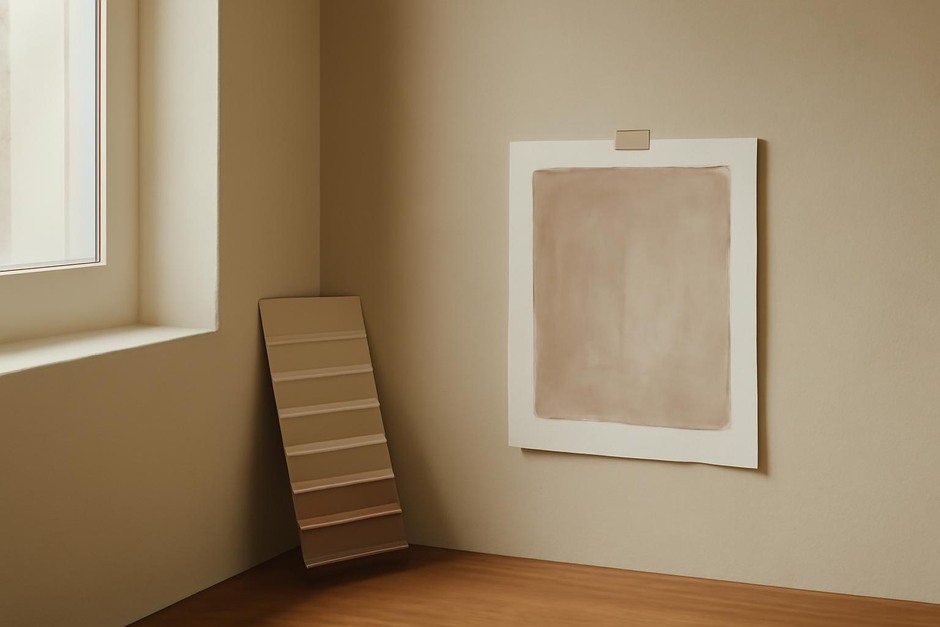
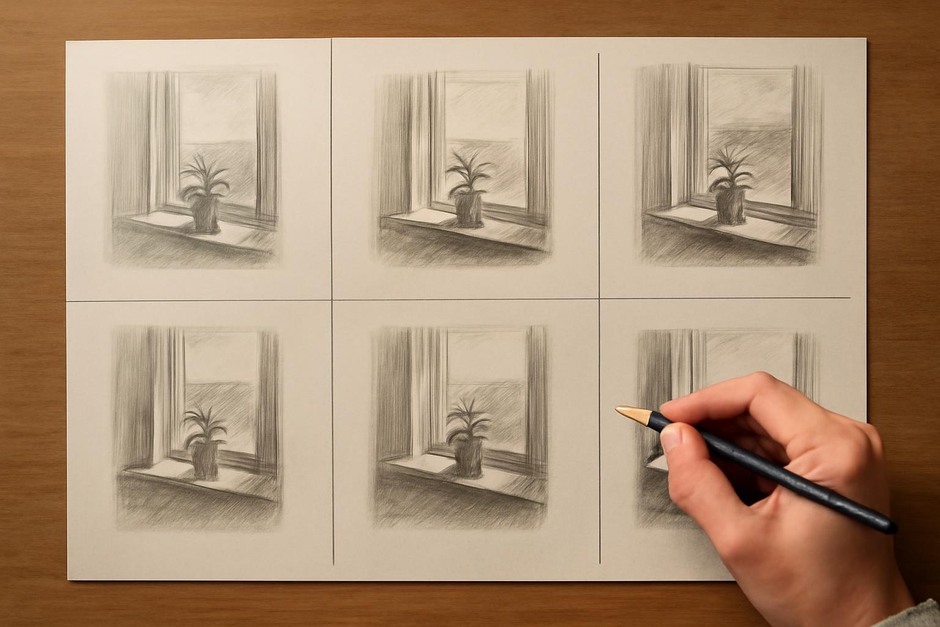
Time-lapse sketching means returning to the same view at set intervals and making a rapid notation of how light and shadow change. You might sketch every thirty minutes over a three-hour window or make a small study at dawn, mid-morning, noon, and late afternoon. The method foregrounds process: the movement of shadow edges, the warming or cooling of reflected colour, and the shifting intensity of highlights.
Time-lapse work is excellent for understanding how a single place behaves. It reveals recurring patterns and helps you plan usage or placement according to how light will behave during different activities. The chief constraint is time: it requires patience and a commitment to repeated observation.
Single-Moment Studies
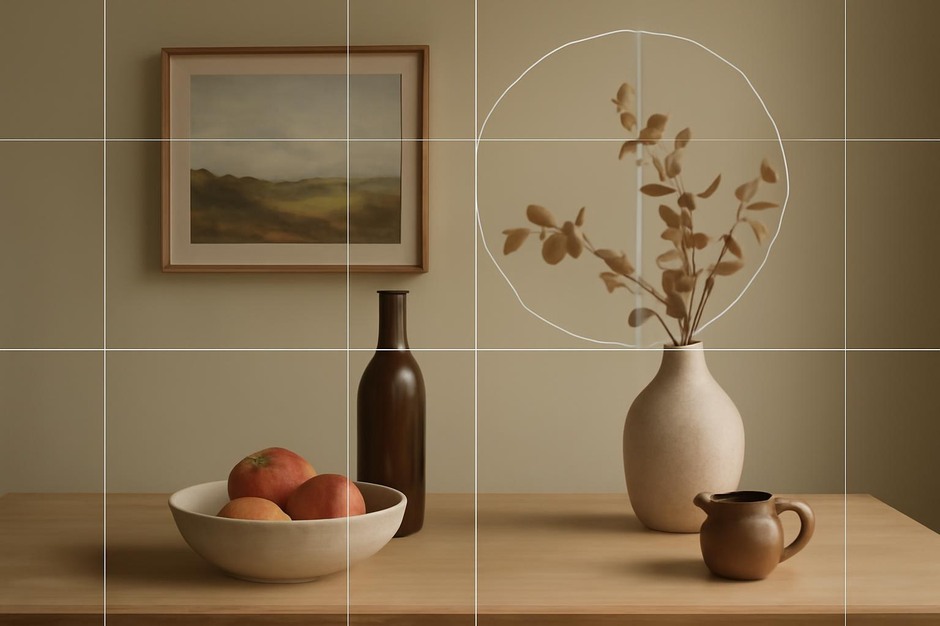
Single-moment studies focus on capturing a particularly rich instant—perhaps the low-angle glow at golden hour or the cool, diffuse light on an overcast day. These studies are often more finished and may be larger in scale and more considered in execution. They are useful when the goal is to capture a mood or to create a study for painting or lighting design.
Concentrated studies allow for depth: careful observation of reflected colour, surface sheen, and the subtle transitions within a single exposure. The risk is that they can miss the dynamics that make the light’s behaviour legible across time.
What Each Method Teaches
- Time-lapse teaches rhythm and movement in light; it exposes cycles and duration.
- Single-moment teaches nuance and intensity; it refines a particular atmosphere.
Combining Approaches
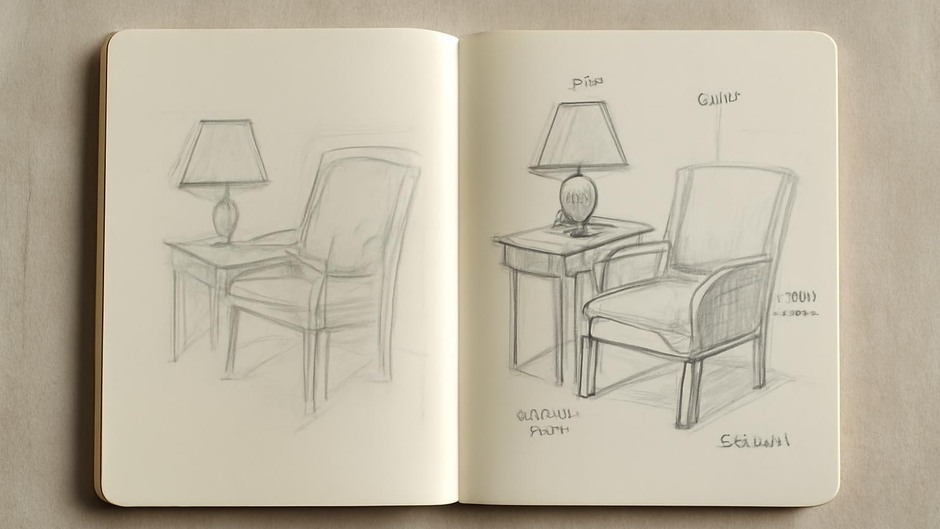
A useful hybrid is to do a quick time-lapse sequence of small studies to map behaviour, then select one of those moments for a larger, more concentrated study. The sequence provides a narrative of change; the single study turns that narrative into a detailed image. This pairing clarifies why a particular instant feels significant relative to the day’s progression.
Exercises
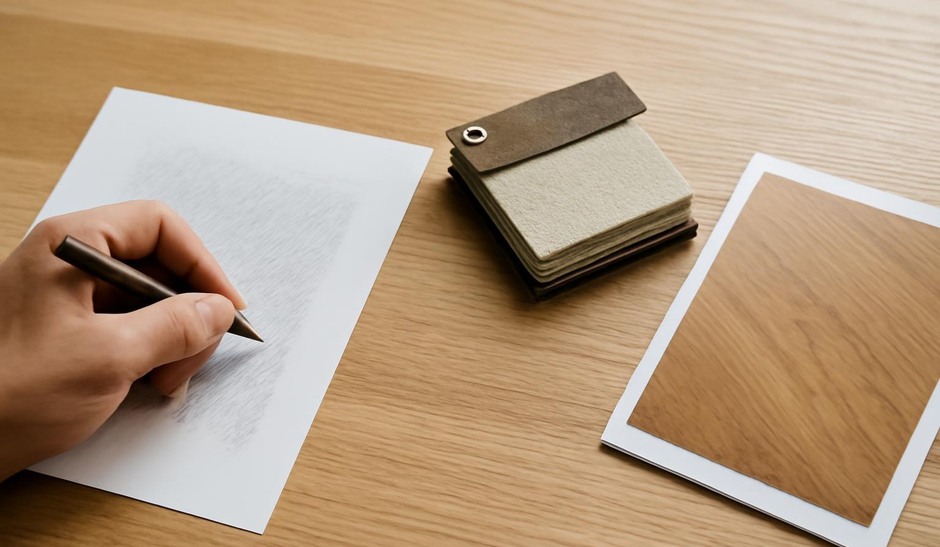
- Choose a windowsill. Make five two-minute sketches at hourly intervals. On a second page, take the most interesting moment and spend thirty minutes rendering a focused study.
- Record the same view on two successive days—one clear, one overcast—and note how time-based patterns differ.
Light is both event and condition. Time-lapse sketches highlight event; single-moment studies reveal condition. Both are essential for a full understanding of interior light and for decisions about colour, placement, and atmosphere.