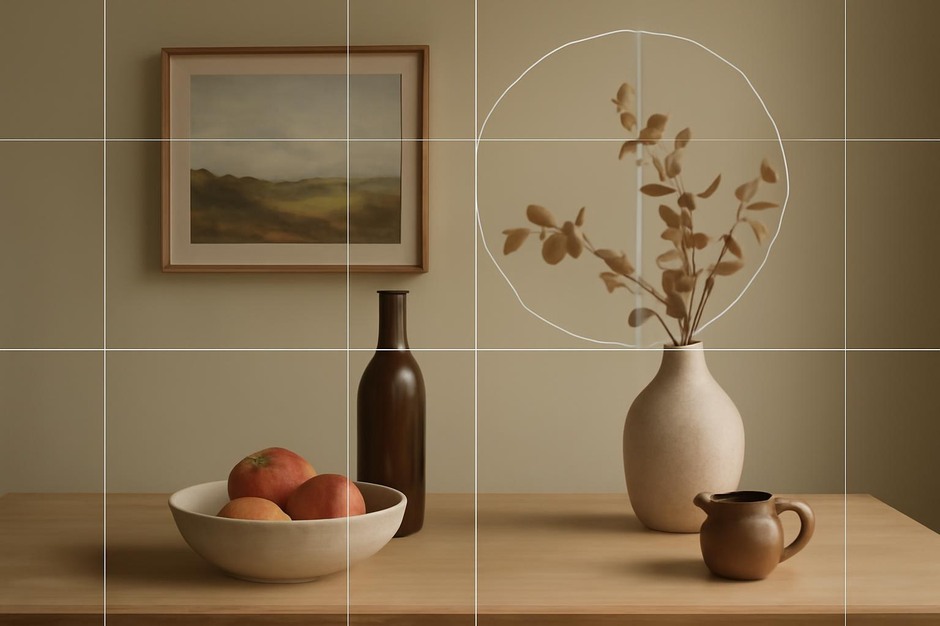
Compositional Frameworks: Grid, Golden Ratio, and Intuitive Balance in Still Life
Compositional Frameworks: Grid, Golden Ratio, and Intuitive Balance
Composing a still life or a vignette within an interior invites decisions about order and visual weight. Three common frameworks guide those choices: an explicit grid, proportional systems such as the golden ratio, and an intuitive balance approach that relies on visual judgement more than fixed rules. This note examines each framework, how they alter decision-making, and how to mix them in practice.
The Grid
The grid is a disciplined tool. It divides the picture plane into predictable units that simplify placement: aligning edges, centres, and axes becomes straightforward. Architects and designers often use grids because they translate easily into measurable layouts. A grid clarifies rhythm and repetition, and it can be both compositional and structural when you are translating a drawn study into a built element.
A grid’s strength is its clarity. It can, however, lead to static arrangements if used rigidly. The challenge is to use the grid as a scaffolding that can be broken or adjusted to introduce tension and variety.
The Golden Ratio and Proportional Systems
Proportional systems—like the golden ratio, rule of thirds, or simple harmonic divisions—offer a middle way by suggesting where to place focal points without enforcing uniform spacing. These ratios have been used for centuries because they often produce pleasing visual relationships that feel neither symmetrical nor chaotic.
Working with proportions encourages attention to relational distances: where a major object sits in relation to negative space, or how an object’s size compares to its surround. Proportional systems nudge decisions rather than dictate them, making them useful for subtle compositional tuning.
Intuitive Balance
Intuitive balance relies primarily on visual judgement. You move objects and adjust placement until the scene feels right. This approach is highly responsive and often yields lively, asymmetric compositions that feel natural. The downside is unpredictability and the difficulty of describing the reasoning later; intuitive choices can be hard to reproduce with fidelity.
Comparative Effects
- Grid promotes order, alignment, and repeatability.
- Proportions encourage harmonious spacing and focal placement without rigid symmetry.
- Intuition prioritizes liveliness, surprise, and character.
Mixing Frameworks
Mixing frameworks can be especially productive. For instance, use a grid to set a basic alignment for architectural elements, apply a proportional guideline to position a key object, and rely on intuitive adjustments to animate the arrangement. The combination allows a composition to be both anchored and responsive.
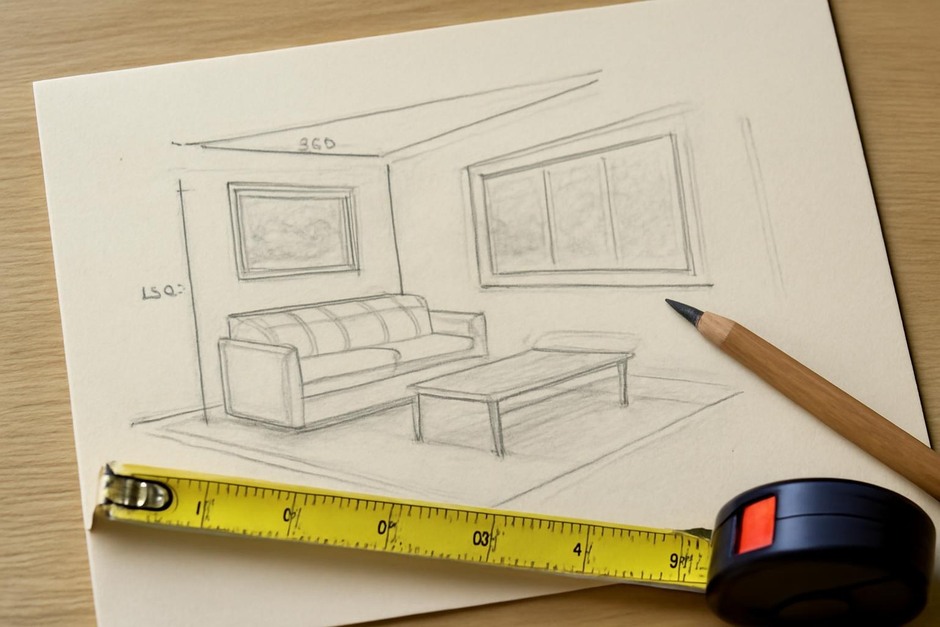
A simple workflow: sketch a light grid to orient walls or shelving, mark a proportional point for the principal object, then tweak placement by eye to introduce a small imbalance that gives interest. Photograph the arrangement and note the deliberate deviations from the grid so you can recreate the balance later.
Exercises
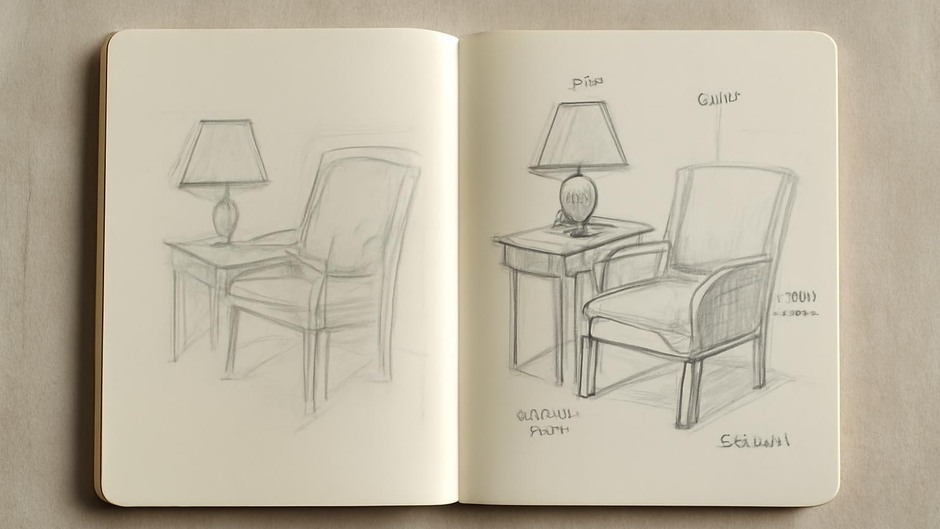
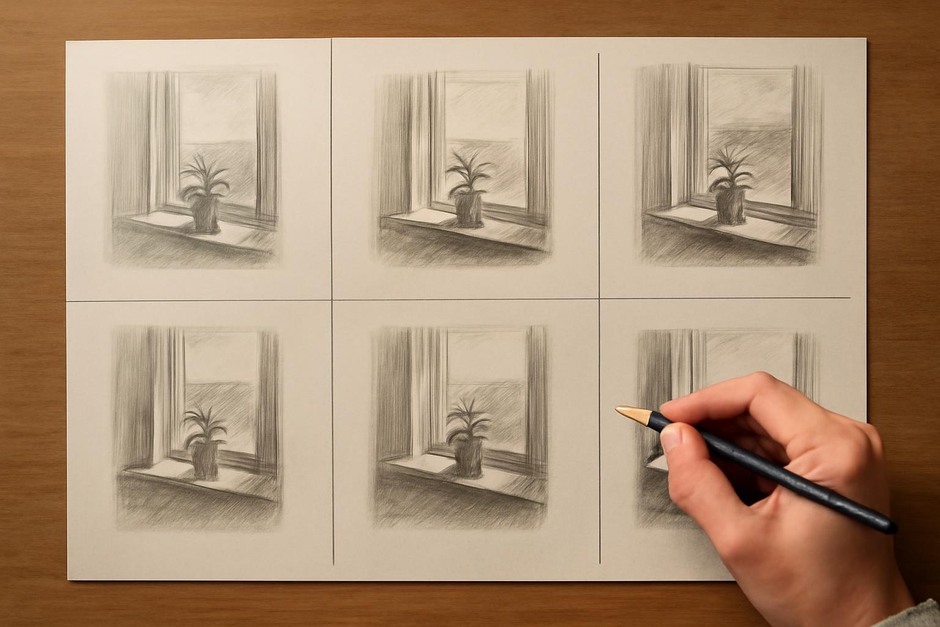
- Compose the same still life three times: once strictly on a grid, once guided by the golden ratio or a proportional rule, and once by intuition. Compare the emotional and spatial differences.
- Start with a grid and intentionally break one or two alignments to see how small deviations change the composition’s energy.
Compositional frameworks are not rules but tools. Each shapes where the eye rests and how objects relate to each other. Comparing them side by side clarifies not only formal outcomes but also which methods help you communicate the qualities you value in a space.